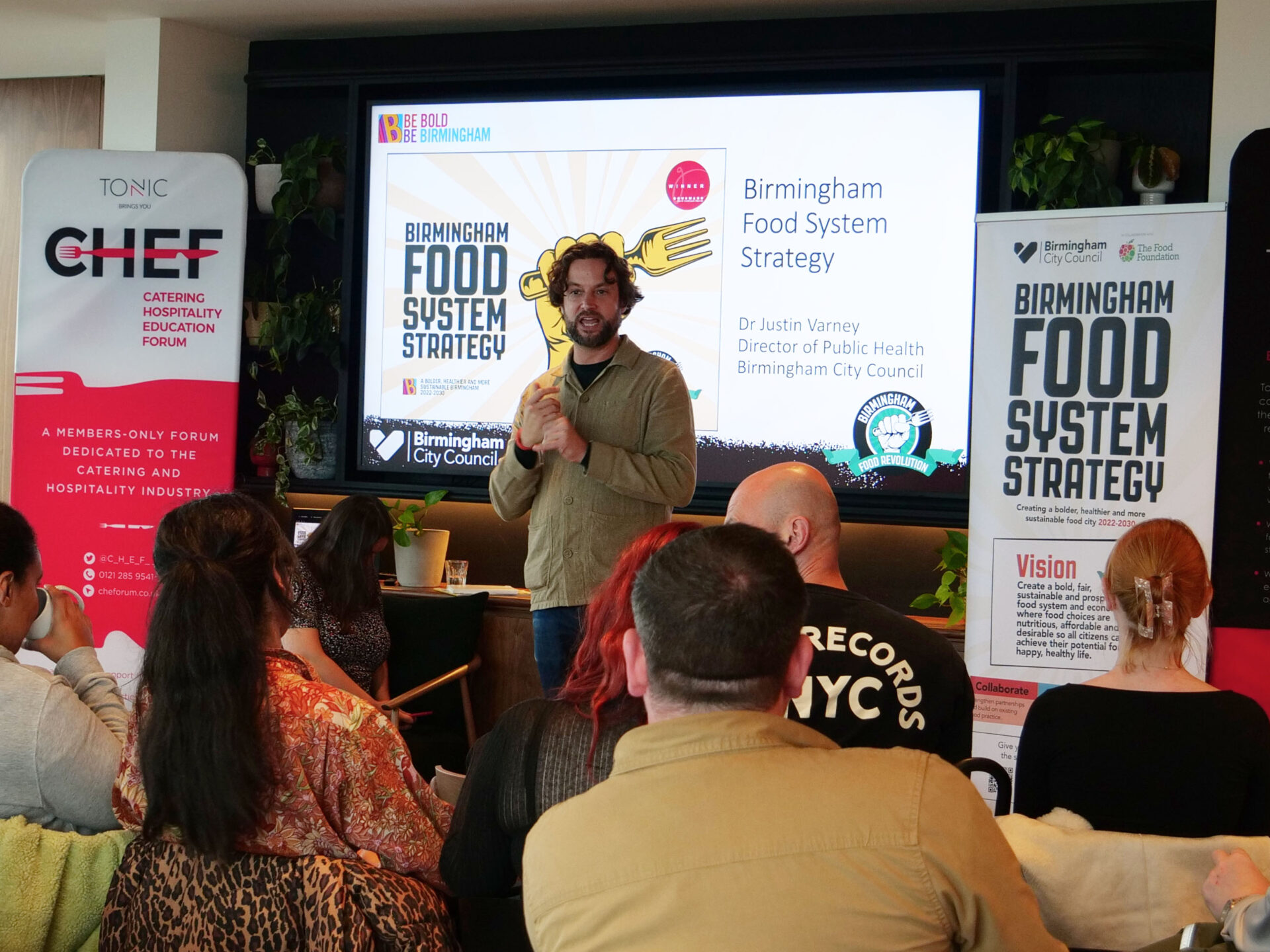
The 2026 Caterer.com Employee Benefits Report came out a few weeks ago, and it’s really worth your time. Our MD Conrad Brunton was one of the contributors, and his section in particular has sparked a lot of conversation across our network.
We’ve been talking about it internally at Tonic, too. As a recruitment business, we sit in a unique spot. We hear what candidates are actually asking for when they sit down to consider a new role, and we hear what operators think they’re offering. The gap between those two things is bigger than it should be in 2026, and closing it is rarely as expensive as people assume.
Here’s what we’re seeing.
Salary still matters. But it’s not the whole conversation any more.
Get the salary wrong, and the conversation ends before it starts. That hasn’t changed. What has changed is what happens when the salary is right.
Candidates are doing their research. They’re reading job ads with a critical eye and noticing what’s missing. The days when “competitive salary, friendly team, exciting opportunity” was enough to fill a role are gone.
When two roles are paying similarly, candidates are choosing based on what surrounds the salary. The benefits, the culture, the scheduling, the staff food, the leadership. All the things that determine how long somebody is going to last.
Some “benefits” are actually legal requirements.
This one is worth saying clearly: statutory sick pay and statutory holiday entitlement are not perks. They are bare minimum. Listing them as benefits in a job ad tells a candidate one of two things: either you don’t know what’s legally required, or you do know and you’re hoping they don’t.
Both readings cost you the application.
The same goes for “free uniform” (in most cases legally required), “training provided” (statutory for most roles), and “pension” (auto-enrolment is mandatory for businesses above a certain size). None of these belongs in the benefits section.
What does belong there? The things that genuinely set your business apart. Read on.
Transparent scheduling
Ask most hospitality workers what would change their life at work, and they won’t say a pay rise first. They’ll say knowing what they’re doing next week, when they are on, when they are off.
Rotas sent out at 9pm on a Sunday for a shift starting Monday morning. Getting called in on a day off because somebody’s gone sick. Never being able to commit to anything outside of work because you don’t know when you’re working. This is still the norm in plenty of businesses, and it’s one of the most common reasons people leave the industry.
Transparent, predictable scheduling lets somebody build a life around a hospitality career rather than in the gaps between shifts. A two-week rota sent out on a fixed day, and a clear policy on swaps. And the biggy? Respecting requested days off.
Staff food
Conrad has been talking about staff food for years, and his article on this for Chef and Restaurant Magazine is worth reading. Linked here.
The headline is simple. What you feed your team tells them what you think of them. A proper, nutritious meal on shift is one of the lowest-lift, highest-impact things any operator can do. The businesses doing this well: (previously) Carters of Moseley, Luca, Sat Bains. All treat staff meals with the same care they treat their guests’ meals. Different scales of business, same principle.
If you’re rethinking your benefits offer and don’t know where to start, start here.
Mental health support
The shift in how hospitality talks about mental health over the last five years has been real, even if there’s a long way still to go. The businesses getting this right have proper EAP provision in place, partner with charities like Hospitality Action, and train their managers to spot when somebody is struggling rather than waiting for them to fall apart.
Hospitality Action membership is genuinely affordable for businesses of any size, and their helpline (0808 802 0282, free, 24/7) is available to everyone working in the sector. If you’ve not signed your team up to know about it, that’s a truly meaningful thing you can do this week.
Development that means something
Career progression is one of the strongest pulls a hospitality business can offer right now. Ask any candidate what they’re looking for beyond the salary, and “somewhere I can grow” sits near the top of the list, every time.
The signal a business sends when it visibly invests in its people is enormous. It tells candidates this is a place that takes their future seriously. It tells the existing team they’re worth investing in. And it tells the wider industry that this operator is building something, not just running something.
The apprenticeship levy is one of the most underused resources in hospitality. Businesses pay into it, then forget to use it. The operators who are getting development right use the levy to fund proper structured pathways for their teams, from apprenticeships through to leadership programmes.
Development that goes somewhere is what keeps ambitious people in your business. The alternative is watching them leave for somewhere that offered them a future.
Where to start
If you’ve read this far, the chances are you’re an operator thinking about your offer, so here are three honest places to start.
Audit your job ads. Strip out anything that’s legally required and put real benefits in its place.
Look at your scheduling. Could you commit to a two-week rota posted on a fixed day this month? If yes, do it.
Sign up to Hospitality Action and tell your team it exists.
None of these require new budget. All of them tell your existing and prospective team that this business has decided they matter.
The full Caterer.com 2026 Employee Benefits Report is well worth reading in full. And if you’re rethinking your hiring approach more broadly, we’d be happy to talk.