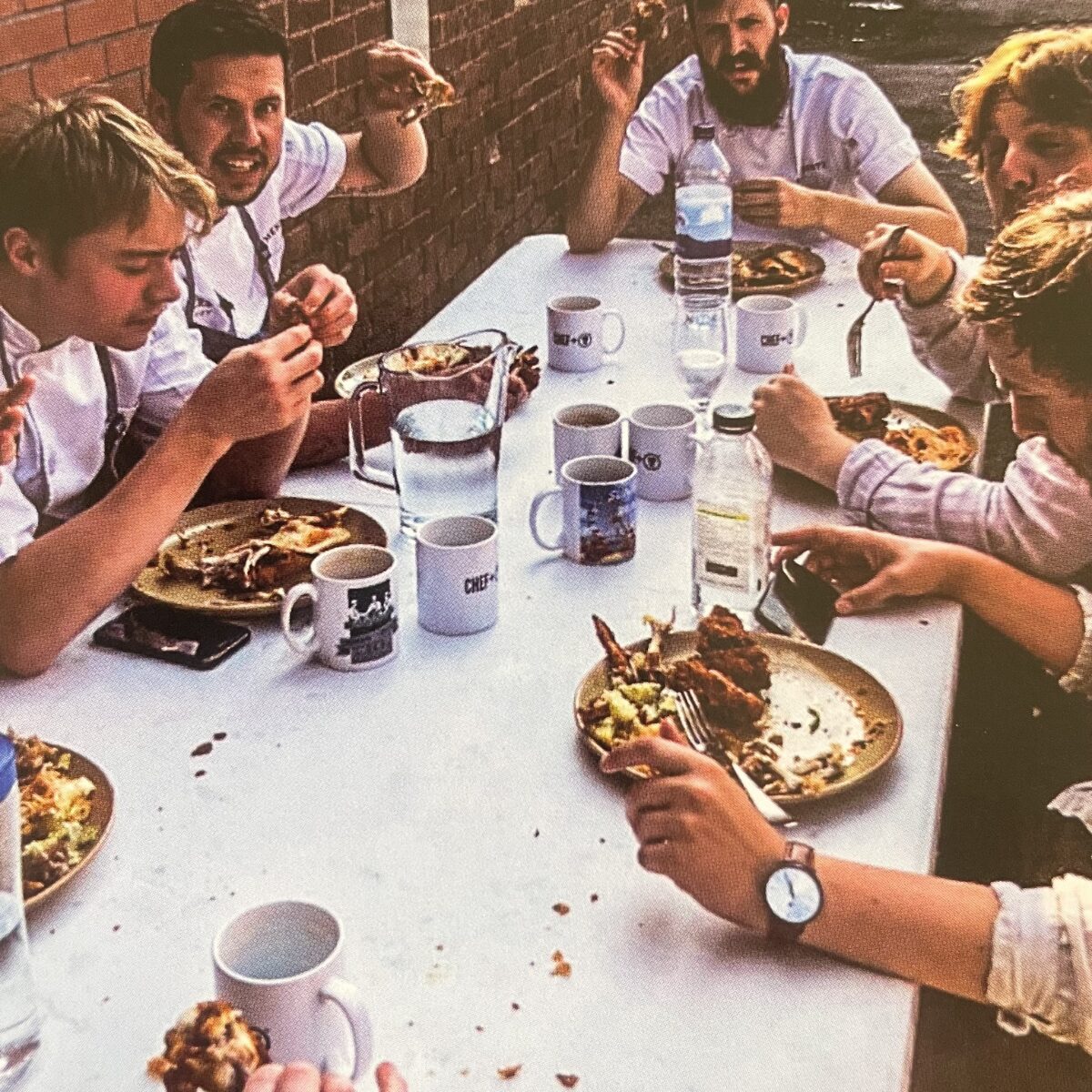
Beyond sustenance
Words by Conrad Brunton
It’s often said that “An army marches on its stomach”, therefore it is agreed that in hospitality, owners and operators must feed their teams, in order that they can be effective in their roles. Moreover, savvy operators know that building a strong feeling of welfare is important. According to Deloitte, 88% of employees and 94% of managers believe that an excellent workplace culture is vital to a business’s success. Having a world-class culture can help you attract and retain top talent, which (as we all know) is hard to do in the hospitality industry.
Everyone reading this must have at least one personal horror story about staff food. For an industry that is concerned with feeding and looking after people, hospitality has not always been so good at nourishing its own staff. Stories of staff being fed on the scraps remaining from breakfast or lunch service should belong in the past, but in reality, they occasionally still exist. This month I have spoken to some people in the industry who are doing better, going the extra mile, and using staff meals as much more than sustenance for their teams.
I will never forget the time many years ago when I purchased my first proper ‘recipe book’. I call it a recipe book because it’s not really a cookbook for someone of my ability. It isn’t a book you turn to when making dinner at home, even if it’s a special occasion. The ‘French Laundry’ book by Thomas Keller, I was in awe of him and his restaurant, at the time it was the best in the world. I couldn’t wait to receive the book and start reading the recipes from somewhere I held in such high regard. When I opened it, I remember looking at the contents page and seeing that on Keller had put aside a small chapter titled ‘Importance of staff meal’. Keller’s words inspired me, here was one of the best chefs in the world extolling the virtues of cooking for his brigade as a young chef – “Staff meal was first about the fundamentals of cooking. How to work with by-products using mainly leftovers to make something tasty, appealing and satisfying. The underlying message was – can you be passionate about cooking at this level? Staff meal. Only the staff see it. If you can make great food for these people, create that habit, have that drive, that sincerity, and keep that with you and take it on to another level in the staff meal, then someday you’ll be a great chef.” At that time, I had already worked in a number of establishments, from large hotels to one-star restaurants and branded operations; staff food had been somewhat hit and miss, here was one of the best chefs in the world dedicating pages to what I saw as something that was really important; talking about staff food.
Creating the staff meal should be viewed positively for its benefit to the team, Harry Stokes, Chef de Partie at the ‘Seahorse’ in Dartmouth, explained, “I take great pride when it’s my turn to cook staff food. The team get huge benefit from sitting together, mixing up both front and back of house, we discuss the day’s service, what we are doing on our next day off and simply enjoy sharing the mealtime, like a family would. It’s a welcome time to decompress, to communicate any issues from service or menu changes to the whole team.”
Birmingham-based Brad Carter, Head Chef and owner at 1 Michelin-starred ‘Carters of Moseley’, cleverly uses his excellent staff meals as a marketing tool. He explained, “I started to post staff meals on the Instagram story every day. These are now getting over 4000 views.” On the back of this, he has also published his first book entitled ‘Staff’. It contains some of the best recipes that he and his team have made to date. For Brad, staff food is a tool for marketing the business, but also to cleverly aid recruitment and of course, staff retention. Potential employees see the Insta-story and think that ‘Carter’s’ must be a fun and interesting place to work. Brad says that each day they take it in turns to create the meals, costing them out to somewhere between £1.50 and £2.50 a portion, which, of course is an investment, but one which he says is very worthwhile. He also insists that everyone takes time to sit together to enjoy the meal, both front and back of house, to talk, to share the food and to have a laugh.
This thinking is echoed by Johnny Smith, who is one of the owners of ‘Clove Club’, ‘Luca’ and ‘Two Lights’. He says at ‘Luca’ (which he runs day to day) the whole team sit down for both breakfast and lunch. At 11:30am they take breakfast, and at 4:30pm, they enjoy late lunch. The table is laid properly, and food is set out buffet style, 80% of the time, it will be something plant-based. Johnny explained, “The food has to be really good fuel for the team, but it’s very much about sharing, about getting together, about feeding and nourishing not just themselves, but the relationships between the team. The menu is planned a week in advance. The (kitchen) team take it in turns to make the meals, it seems to work really well and the times that we sit down are a real highlight of the day.”
Johnny explained that he’s always been pretty lucky with the quality of Staff meals in his time in the industry, and it’s something that he believes is incredibly important for the welfare and happiness of his team. I asked him what happens if guests occasionally dwell in the restaurant after lunch (where the staff sit to eat), he explained: “We all still sit down in the restaurant, and the guests love it, their feedback is that it’s great to see the staff getting together to eat and enjoying their break.”
Teams coming together as one and enjoying a healthy, well-balanced meal seems to be accepted as the ideal approach. Someone who has taken this even further is Sat Bains. I was grateful he gave me some time on the phone to discuss this. He explained, “The team sit down together for breakfast and dinner, even though they’re busy, they do it in two sittings. We use quality ingredients to cook dishes that provide fuel in the form of slow-release energy.” Sat’s desire for their staff meals to be nutritious and well-balanced has seen him begin working with a leading food nutritionist to look over the different dishes that they’re going to be serving that week, to make sure that they are well-balanced. Inspiration for what to make each day for staff comes from Sat’s many friends in the trade, he explained “I have lots of friends within the industry who have written homestyle cooking books; Marcus Waring, Tom Kerridge and Paul Ainsworth to name just a few. The team will often cook recipes from these books. It’s a really good way of us testing out their recipes! The dishes are always really delicious and provide an excellent basis for our staff meal. In the mornings we have something like porridge, fruit and yoghurt or bacon and eggs. In the afternoon it will be something fresh and healthy to provide good fuel for the team. I want them to feel valued. This is just one way that we show that to them. On their birthday, they get to choose their own meal; they have whatever they want. Mine is steak and chips. We use the best ingredients available for our guests, why not do the same for our team.”
I appreciate that everything discussed here takes time, thought and, inevitably, some level of financial investment. I like the idea of trying to get the whole team to sit down twice a day to eat, and the positive feeling that must deliver. Offering something at breakfast time (healthy cereal, fruit and toast) that is quick to prepare, healthy, and filling is a great idea, as we know many people skip the most important meal of the day. Making sure that staff meals are healthy and balanced makes perfect sense, and in the long run will keep your team fit and healthy and increase your staff retention.
I hope after reading this you can make a couple of small improvements to your staff food, and that these changes have a positive effect on your team, culture and therefore business overall.